

Introduction: Cadillac’s Formula 1 Mission Begins — With Intent
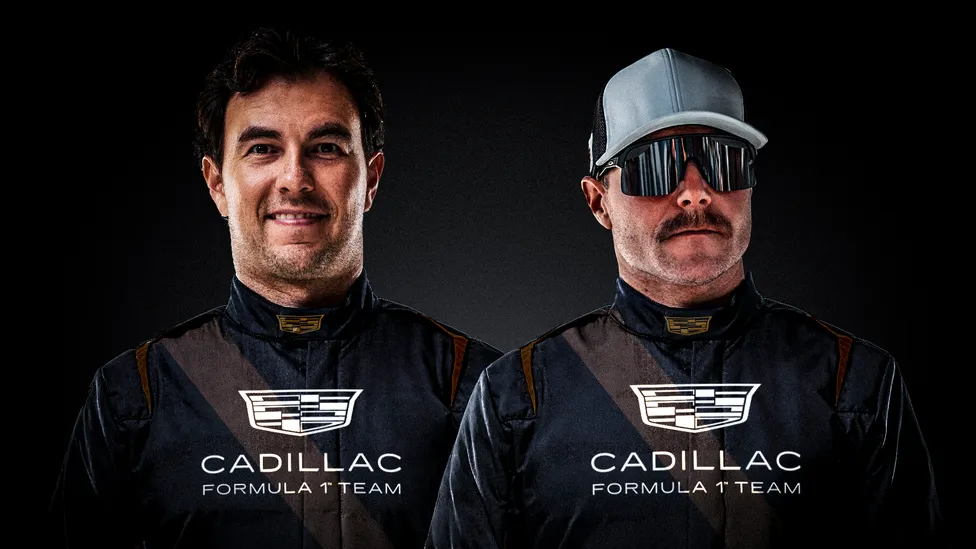
Cadillac, backed by General Motors and partnered with Andretti Global, is no longer on the F1 periphery. With its entry approved and its driver lineup officially confirmed—Valtteri Bottas and Sergio Pérez—Cadillac is arriving on the grid not as a hopeful outsider, but as a calculated, technically equipped challenger.
This is not a branding exercise or a token American expansion. It’s a serious play for engineering credibility and long-term relevance in the world’s most elite motorsport. And with a veteran driver pairing and a well-financed development program, Cadillac’s Formula 1 debut is shaping up to be one of the most compelling new team entries in recent F1 history.
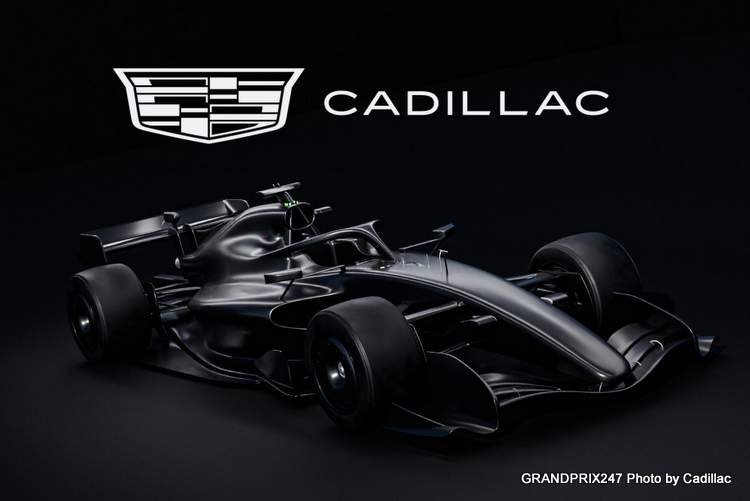
The Car: Development Strategy and the Powertrain Path
A Two-Phase Engineering Model
Cadillac’s entry will unfold in phases. In the short term—through the 2026 and 2027 seasons—the team will run with a customer power unit (likely Renault), enabling them to focus entirely on chassis and operations without the burden of early powertrain development.
Come 2028, Cadillac will debut its in-house General Motors power unit, built under the sport’s new hybrid regulations. This timing is strategic: GM has the resources to develop a competitive engine, but it’s choosing to learn the sport’s rhythms first, rather than rush into the complexity of hybrid-era engines prematurely.
Aerodynamics and Chassis Philosophy
Initial indicators suggest Cadillac is focusing on a high-efficiency aero package—a car that’s stable, predictable, and versatile across circuit types rather than reliant on extreme downforce. The design work is being coordinated from a new UK-based facility, close to the F1 engineering talent pool.
GM’s expertise in data modeling and AI-assisted simulation will play a crucial role. From tire degradation forecasts to race strategy optimization, Cadillac is expected to integrate machine learning into every layer of its race-day decision-making process.
The Drivers: Bottas and Pérez Bring Gravitas and Firepower
With the official confirmation of Valtteri Bottas and Sergio Pérez, Cadillac has made one thing clear: this team isn’t here to learn slowly—they’re here to compete seriously from race one.
Valtteri Bottas: The Development Anchor
Bottas, a 10-time Grand Prix winner and former Mercedes No.2, is a known quantity in the paddock. Calm, consistent, and deeply technical, he brings championship-winning insight into car development, race setup, and driver feedback loops.
For a new team, Bottas is a foundational asset. He knows how top-tier programs are run, and his ability to help engineers correlate simulation data with on-track behavior will accelerate Cadillac’s development pace dramatically.
Sergio Pérez: The Street Fighter Strategist
Pérez, known for his aggressive racecraft and tire management mastery, adds a different dimension. After a tumultuous run with Red Bull, he enters Cadillac with something to prove—and a chance to lead a team on his own terms.
Pérez’s strengths in chaotic races, street circuits, and long-run consistency will be invaluable in the early seasons, when outright qualifying pace may lag behind. His popularity across North and Latin America also aligns perfectly with Cadillac’s commercial ambitions.
The Vision: More Than a Race Team
Reasserting American Engineering on the World Stage
Cadillac’s entry isn’t about waving a flag—it’s about proving American industry can thrive in the most technologically demanding motorsport on earth. While F1 has leaned into the U.S. market with races in Miami, Austin, and Las Vegas, its team landscape has remained deeply Eurocentric.
With Cadillac, that changes. GM’s commitment is long-term and multi-dimensional: investing in infrastructure, building power units in-house, and developing a team culture from the ground up. This is a full factory effort, not a rebranded customer team.
Technology Transfer and R&D Payoffs
The value of F1 lies not just in TV ratings, but in high-performance R&D. Cadillac’s involvement offers a sandbox to test next-generation materials, energy recovery systems, and real-time analytics—all of which could eventually influence GM’s electric vehicle and software platforms.
In this light, Cadillac’s F1 car becomes more than a marketing halo. It’s a proving ground for everything from power electronics to predictive maintenance systems.
Challenges: The Climb Ahead
Navigating F1’s Political Terrain
Cadillac’s approval into the F1 paddock was met with resistance. Existing teams expressed concerns over prize money dilution and the team’s value proposition to the sport. Translation: new players must prove they belong.
Now that Cadillac is in, they’ll need to build alliances quickly—among suppliers, within FIA circles, and inside the competitive and sometimes closed-off world of F1 operations.
Technical Ramp-Up in a Compressed Window
The team will need to build infrastructure, staff up with experienced personnel, and establish working processes under cost-cap conditions—all while building a competitive car.
Even with Bottas and Pérez helping to fast-track development, the learning curve is steep. F1 has no patience for inefficiency. Each missed update or failed upgrade can cost positions and momentum.
Strategic Advantages: What Cadillac Has in Its Corner
Driver Feedback Loops
With two veteran drivers, Cadillac starts with an asset most new teams don’t have: highly reliable, experienced feedback from the cockpit. Bottas and Pérez know how to diagnose issues, communicate with engineers, and extract performance from imperfect packages.
That insight will allow Cadillac to correlate wind tunnel data, adjust simulator models, and fine-tune their mechanical setup far faster than a rookie-led team.
Financial and Technological Backing
GM brings industrial-scale resources—and not just money. Its investment in electric propulsion, data analytics, and advanced materials provides Cadillac with a deep reservoir of tech to draw from.
Unlike smaller entrants who are dependent on third-party suppliers or technical partnerships, Cadillac can push forward its own R&D agenda, aligning racing with road car innovation.
Market Positioning
With Bottas and Pérez, Cadillac has secured two globally recognized faces with cross-market appeal. Their ability to connect with fans across Europe, the Americas, and Asia gives Cadillac a valuable commercial platform—even before the results come.
Year-by-Year Outlook: What Success Might Look Like
2026 (Year One)
-
Focus: Finishes over flashy results.
-
Target: Reliable race completion, no major DNFs, early signs of performance data correlation.
-
Success Metric: Consistency, operational precision, and mid-field battles.
2027 (Year Two)
-
Focus: Refining the chassis; beginning to optimize package for 2028 engine integration.
-
Target: Regular Q2 appearances, points on merit, strong reliability metrics.
-
Success Metric: Midfield foothold and early competitive credibility.
2028 (Year Three)
-
Focus: GM-built power unit debuts.
-
Target: Leap forward in performance; possibly contending for top-6 finishes.
-
Success Metric: Demonstrated parity with mid-grid teams like Alpine or Aston Martin.
2030 and Beyond
-
Focus: Establishing Cadillac as a serious factory team.
-
Target: Podium challenges, possible dark-horse victories.
-
Success Metric: Cadillac becomes synonymous with performance, not just presence.
The Bigger Picture: Cadillac’s F1 Entry as a Cultural Shift
In a sport long dominated by European and Japanese manufacturers, Cadillac’s arrival is more than a business move. It’s a cultural repositioning of what American performance means in 2025 and beyond.
Bottas and Pérez aren’t just drivers—they’re the human interface for a new brand story. One that blends old-school race grit with new-school technical ambition.
They bring not just lap time, but legitimacy. And that might be Cadillac’s most valuable early win.
Conclusion: Cadillac Enters, Not to Participate — But to Compete
Cadillac’s Formula 1 entry is bold, expensive, and strategically fraught—but it’s not naive. With experienced drivers, GM-backed technology, and the long view in mind, the team has built the foundations to not only survive, but thrive.
There will be setbacks. Growing pains are inevitable. But this is a team that’s serious about its role—not just in F1, but in reshaping the narrative of American motorsport.
From the boardroom in Detroit to the pit wall in Bahrain, Cadillac is in the game. And the sport is better for it.
Cadillac’s entry into Formula 1 is colored by ambition, engineering potential, and strategic urgency. It’s both a marketing maneuver and a technological push. The road will be tough: boardroom politics, gravel-trap mistakes, and on-track growing pains.
But Cadillac doesn’t need early podiums. It needs momentum. It needs purpose. And if its engineers can knit together vision, reliability, and performance, it could reshape not just GM’s future—but a new chapter in F1’s evolving identity.
In the end, Cadillac’s greatest victory might not be a trophy—but launching a serious American racing narrative back into the world’s fastest sport.

Be the first to comment