
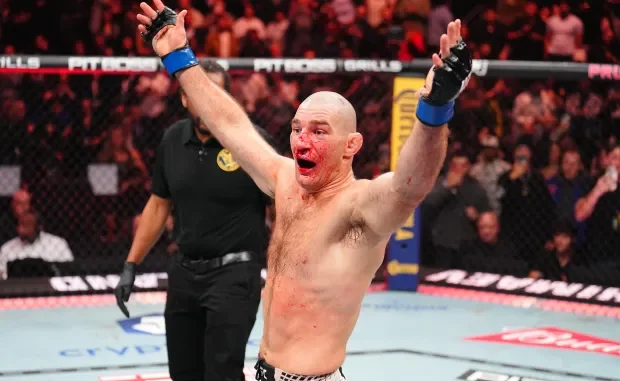
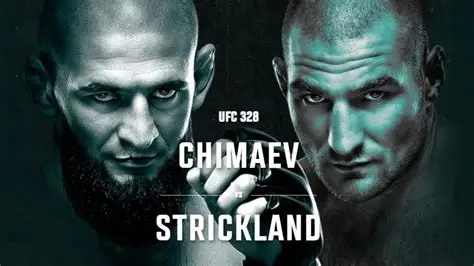
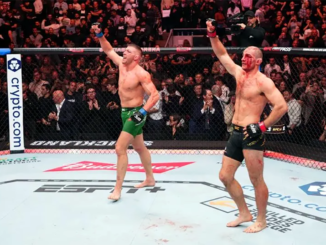
Sean Strickland has built a career out of making elite fighters uncomfortable, not through mystery or elegance, but through the kind of stubborn, grinding simplicity that looks ordinary until it starts breaking men down. Against Khamzat Chimaev at UFC 328, that simplicity became championship material again. In Newark, New Jersey, Strickland reclaimed the UFC middleweight title by split decision after five rounds against a fighter who had entered the bout undefeated and carrying the aura of inevitability. The official result was 48 to 47, 48 to 47 and 47 to 48, with Strickland becoming champion for the second time and Chimaev suffering the first loss of his professional mixed martial arts career.
The fight was fascinating because it did not destroy the image of either man. It complicated both of them. Chimaev remains a terrifying force, but he looked human over twenty five minutes. Strickland remains awkward, blunt, technically narrow in appearance and yet absurdly difficult to solve. The contrast was obvious from the opening seconds. Chimaev did what Chimaev does. He sprinted into the fight, crashed through distance and had Strickland on the canvas almost immediately. Within fifteen seconds, the champion had the fight in the world he wanted, with Strickland folded against the fence, dragged down, threatened from the back and forced into survival mode.
That first round looked like the beginning of a familiar Chimaev story. Pressure, wrestling, panic, control. Strickland spent long stretches defending hooks, hands, chokes and mat returns. He was not winning the round. He was proving something more important. He was not drowning. Against Chimaev, especially early, survival is not passive. It is a skill. Strickland stayed calm enough to hand fight, build back to his knees, protect his neck and keep forcing Chimaev to work. By the time the horn sounded, Chimaev had banked the round clearly, but he had also spent energy trying to finish a man who refused to accept the script.
The second round changed the fight. Strickland’s jab began to arrive with rhythm, and Chimaev’s takedown entries started to meet resistance. When Chimaev rushed in, Strickland found moments to reverse position, land on top, punch from above and make the champion pay for failed shots. It was not reckless ground and pound, nor was it a sudden transformation into a dominant grappler. It was something more Strickland than that. He made the exchanges messy, functional and irritating. He forced Chimaev to fight every inch of the fight, then stood in front of him and resumed stabbing him with straight punches. Sherdog’s live scoring gave Strickland the second round, and the official scorecards later showed that two judges agreed.
By the third, the bout had become a question of interpretation. Chimaev was still dangerous, still walking forward, still capable of landing the heavier blows. Strickland was doing what he always does when he is at his best. He was reducing the fight to its most basic elements and daring the other man to solve them under fatigue. The jab, the one two, the shoulder roll, the upright pressure, the refusal to overreact. Chimaev’s face was being marked up by straight punches, while Strickland’s nose was bloodied by heavier counters and bursts from the champion. It was not pretty, but it was compelling because both men were finding success in very different ways. The officials who gave Strickland rounds two, three and five were effectively rewarding his cleaner volume and late round control over Chimaev’s bursts and wrestling moments.
The fourth round belonged to Chimaev on most live reads because he brought back some of the physical authority that had made the first so dominant. He attacked the body, kicked the lead leg, landed heavier punches and finished the frame with a strong double leg that put Strickland down with authority. The difference was that by then, the takedowns were no longer producing the same sense of crisis. They mattered, but they were not ending the argument. Strickland was being taken down, but he was not being broken. Chimaev was winning the round, but not restoring the inevitability of round one.
That left the fifth round as the real championship round, and it carried the strange tension that only close title fights produce. Chimaev scored early takedowns, but Strickland scrambled back up. Chimaev threw the heavier shots, but Strickland’s straight punches were cleaner. Chimaev tried to impose himself, but Strickland kept resetting the terms of the exchange. In the final thirty seconds, with both men exhausted and the title still uncertain, Strickland’s jab and straight punches gave the judges a closing image that mattered. It was not dominance. It was persistence under fire. It was the kind of round where every argument has a counterargument, and that is why the split decision felt both controversial and understandable.
The numbers reflect the divide. Strickland landed more significant strikes, with multiple reports and UFC Stats summaries placing him ahead in that category, while Chimaev completed nine takedowns and created the more dramatic grappling sequences. That is the scoring debate in one sentence. Do you value the visible wrestling success and heavier moments, or the cleaner striking, defensive recovery and cumulative control of pace? The judges split, but the belt went back to Strickland.
There was also an unexpected grace note after the bitterness of the build up. Chimaev wrapping the belt around Strickland after the decision gave the event a human finish that the promotion of the fight did not necessarily deserve. Strickland, who had leaned into inflammatory pre fight talk, reportedly apologised afterward and acknowledged that he had gone too far in selling the contest. It did not erase the uglier parts of the lead up, but it gave the ending a sense of mutual respect that mattered.
For Strickland, this was another reminder that his style is much deeper than it looks. He is easy to underestimate because the tools are familiar. A jab. A high guard. A stubborn march. A refusal to panic. Yet against elite fighters, those familiar tools become suffocating when paired with durability, cardio and defensive awareness. He is not a fighter who dazzles by variety. He wins by forcing opponents to operate in a narrow hallway for five rounds, then punishing every mistake they make while trying to escape it.
For Chimaev, the loss is damaging but not defining. He showed he can dominate early, hurt Strickland, wrestle him, take his back and win rounds against one of the most difficult middleweights in the world. What he also showed is that championship fights demand more than explosive superiority. They demand pacing, patience and the ability to keep winning exchanges when the opponent has survived the first wave. Chimaev is still elite. He is just no longer mythical.
The middleweight division now has a familiar champion in unfamiliar territory. Strickland is a two time UFC champion, but he remains the kind of champion who never quite feels secure because every fight he wins seems to raise another argument about how he won it. That is part of his strange appeal. He does not settle debates so much as create new ones. Against Chimaev, he survived the storm, found his rhythm, and took the belt back in a fight that will be argued over because it deserved to be argued over.
In the end, UFC 328 was not a clean coronation. It was a hard, bloody, disputed prize fight decided by inches, habits and fatigue. Chimaev looked like the more dangerous man in moments. Strickland looked like the more durable one across the full distance. The judges chose the man who made it to the final bell still touching the target, still standing his ground, still doing the same simple things well enough to turn chaos into a title.
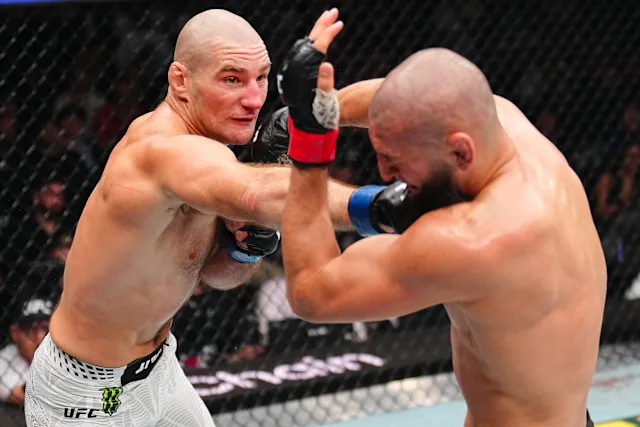
Blow by blow round summary
Round 1
• Chimaev shot almost immediately and landed the first takedown within the opening fifteen seconds.
• Strickland was forced to defend from the fence and then from back control.
• Chimaev threatened with hooks, positional control and choke attempts, but Strickland survived.
• Clear Chimaev round due to wrestling dominance and control.
• Likely score: 10 to 9 Chimaev.
Round 2
• Strickland began establishing the jab and finding cleaner straight punches.
• Chimaev’s takedown attempts became less clean, with Strickland stuffing shots and reversing into top position.
• Strickland landed meaningful ground shots after failed Chimaev entries.
• Momentum shifted as Chimaev started looking less explosive.
• Likely score: 10 to 9 Strickland.
Round 3
• Both men boxed for long stretches, with Strickland doubling and tripling the jab.
• Chimaev landed heavier moments, but Strickland’s straight punches were cleaner and more consistent.
• Both fighters showed damage, with Strickland’s nose bloodied and Chimaev marked up by jabs.
• Close round, but Strickland’s volume and accuracy likely edged it.
• Likely score: 10 to 9 Strickland.
Round 4
• Chimaev regained momentum with heavier strikes, body attacks and stronger forward pressure.
• Strickland continued jabbing, but Chimaev landed some of the more eye catching shots.
• Late in the round, Chimaev scored a strong takedown and finished with control from behind.
• Clearer Chimaev round than the third.
• Likely score: 10 to 9 Chimaev.
Round 5
• Chimaev scored early takedowns, but Strickland repeatedly scrambled back up.
• Strickland resumed jabbing and landing straight punches while Chimaev looked for heavier counters.
• Chimaev’s wrestling mattered, but he struggled to hold Strickland down or create decisive damage.
• Strickland finished the round landing cleaner straight punches and front kicks as Chimaev swung big.
• Very close round, but the judges who awarded Strickland the fight gave him this frame.
• Likely score: 10 to 9 Strickland.
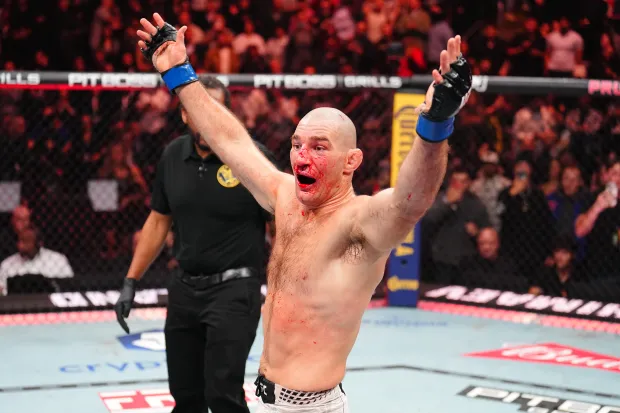
Official result: Sean Strickland defeated Khamzat Chimaev by split decision, 47 to 48, 48 to 47 and 48 to 47.


Be the first to comment