
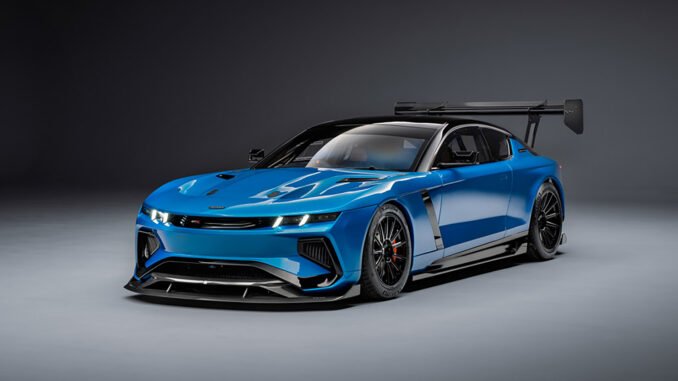
Marking the start of a new era, Jensen International today reveals the all-new Jensen Interceptor GTX. The 960bhp, rear-drive, track-only car is an enhanced prototype, an engineering and development template that previews future road-going new Jensen Interceptor models, images of which have also been revealed for the first time.
Designed, engineered and handcrafted in the UK, the supercharged V8 GTX respectfully draws inspiration from and pays homage to Jensen’s rich heritage, but is no ‘restomod’ or ‘recreation’.
Entirely new, it is a completely fresh, forward-looking reinterpretation of the Interceptor legend, and, most importantly of all, a statement of intent for future road-going new Interceptor variants. The company’s product roadmap includes an ultra-high-performance GTR model – a street-legal version of the GTX – and a luxury, grand-touring-optimised GT model.
Several of the GTX’s elements are close to production level, with many able to carry over as they are. The Interceptor GTX also represents the physical proof point of Jensen International’s credibility, engineering capability, and supplier network.
“We were determined to create something entirely new that carries the spirit of the Jensen Interceptor forward in a modern, authentic manner and, perhaps in the case of our first car, the track-focused GTX, in a way people would not expect. Obviously, the 1966 Jensen Interceptor is a significant inspiration for us. And not just visually, but in terms of what that car represents. From the outset, though, our intention was never to build a continuation car or revisit something that already existed,” explains Jensen International Managing Director, David Duerden.
“Indeed, this project hasn’t started with a marketing exercise or a nostalgic idea about recreating the past. We’ve approached it as engineers and enthusiasts. And the first Jensen Interceptor, the GTX, is a physical expression of that philosophy – a highly developed prototype and a pure track-focused machine offering extreme performance.
“In many ways, you could say we started the project at the end, rather than the beginning, as the car represents a significant step towards the final engineering direction, the established supplier relationships, and the broader business foundations for where we will take Jensen International in the future.
“We chose to begin with the track-focused GTX because it is the clearest first expression of the new Jensen programme. It allows us to prove the engineering, design direction and specialist supplier base behind the car, while giving prospective customers something tangible and fully functional to experience. The road-going models that will follow have been conceived as part of the same development path. The GTX is the first physical variant of that programme, not a separate exercise. Around 80 per cent of its exterior form, including key body panels and associated tooling, is intended to carry through to the eventual road-going car range.
“Beyond the GTX programme, our ambition is to develop a low-volume series of road-going GTR cars with the same analogue feel and ultra-high-performance credentials, followed by a fully luxury-oriented GT model, a model most closely inspired by the original Interceptor. We’re taking that process one step at a time and, crucially, making sure that each stage is properly funded, designed, engineered and developed. We’re very clear about what we want those next stages to become, while being fully flexible to work with our customers and respond to their specific needs.”
Managing Director David Duerden, Client Relations Manager Durran Heslop and the wider Jensen International team, led by Technical Director Jack Glennon, possess decades of combined experience with and understanding of the Jensen marque. The company is part of the Jensen International Group and draws on almost two decades of experience in the restoration and re-engineering of the classic Jensen Interceptor, creating bespoke versions of the definitive British Grand Tourer, the Interceptor R, under the Jensen International Automotive brand.
Jensen International is also supported in the development and launch of the Interceptor GTX by Jeff Qvale, a leading figure in the US automotive industry, with exceptional experience and insight into the global high-end automotive clientele sector.
Qvale’s family history spans importing, distribution, retail and limited-series manufacturing across British, Italian and performance marques. As a teenager, he also spent time at the Jensen Motors factory in the UK, when his father was the company’s major shareholder, and today holds the same passion and respect for the brand as Jensen International.
“For me, this project is very personal because Jensen was such a significant part of my father’s life and our family history. I spent a great deal of time at the factory during the 1970s, working across different departments and seeing first-hand what it took to build and develop these cars. Those experiences stayed with me,” explains Jeff Qvale.
“What excites me about the Interceptor GTX is that it isn’t trying to recreate the past or compete with the most extreme modern hypercars. The car follows the traditional Jensen philosophy of a powerful, hand-built British GT with real character, but reinterpreted using modern engineering and technology to write a new chapter.”
While inspired by the proportions, presence, and enduring impact of the original 1966 Jensen Interceptor, the design of the all-new Interceptor GTX focuses firmly on the future – not the past. Jensen International worked closely with leading independent studio Avant Design, whose forward-thinking design approach employed emerging techniques, resulting in the highest-quality design solutions. Expressing what a modern Jensen Interceptor could have become had the marque continued to evolve uninterrupted into the present day, the design language is also evident in the images of the Jensen Interceptor GTR and GT models.
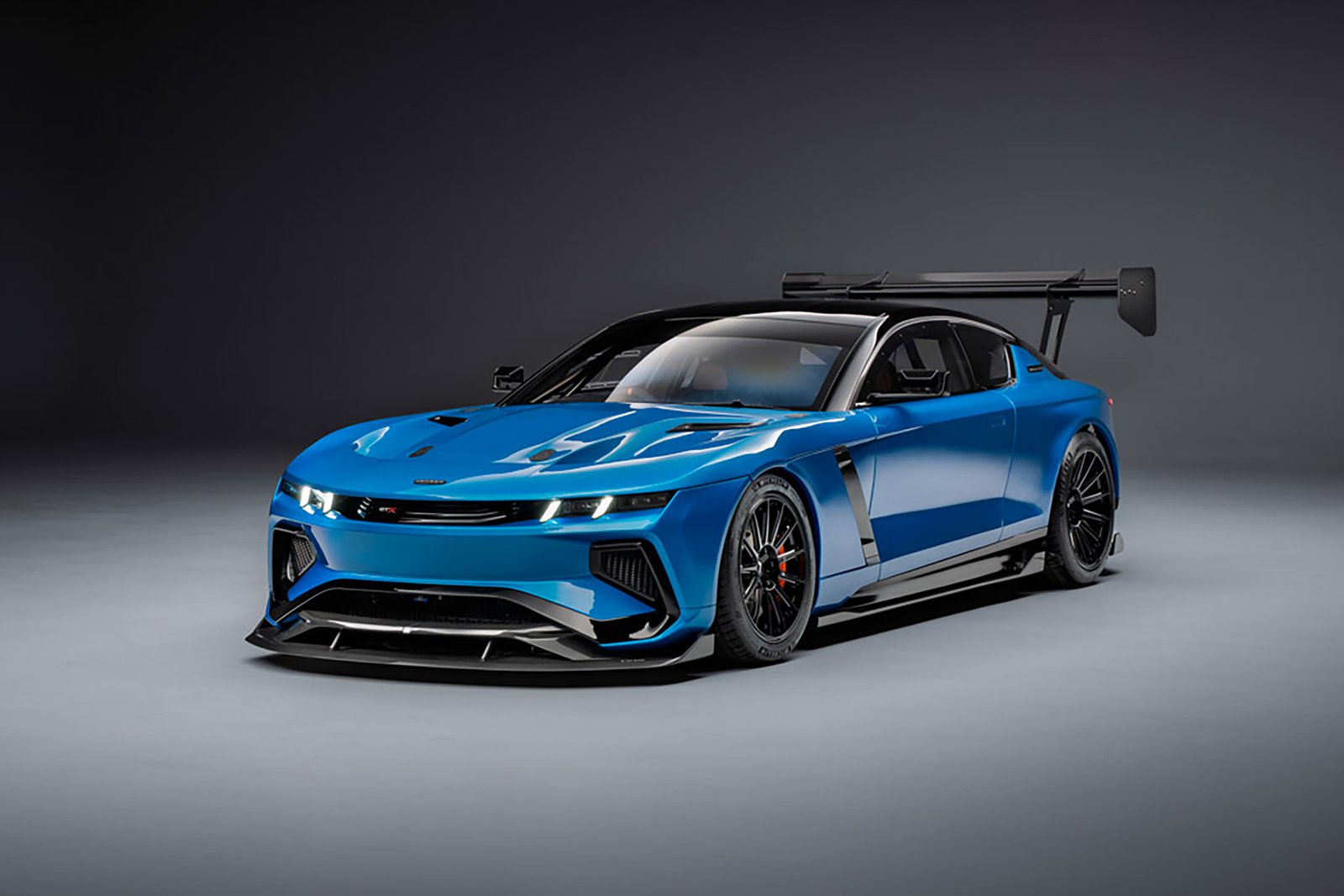
Featuring a coachbuilt, handcrafted aluminium body, the 2026 Interceptor GTX retains the classic front-engined, cab-rearward GT proportions closely associated with the steel-bodied 1966 car, with a long bonnet, tightly drawn passenger compartment and powerful rear haunches. However, the surfacing, detailing and overall design are significantly more assertive and contemporary in execution.
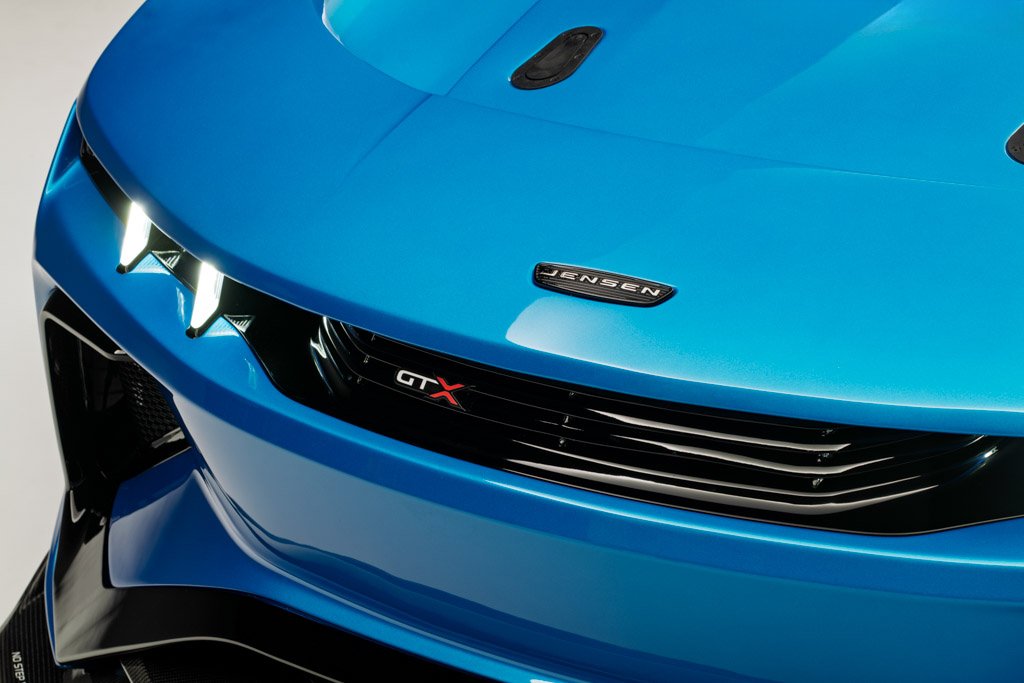
Viewed from the front, the GTX presents a low, wide and purposeful appearance, combining slim horizontal LED lighting elements with large functional air intakes and deeply sculpted aerodynamic forms.
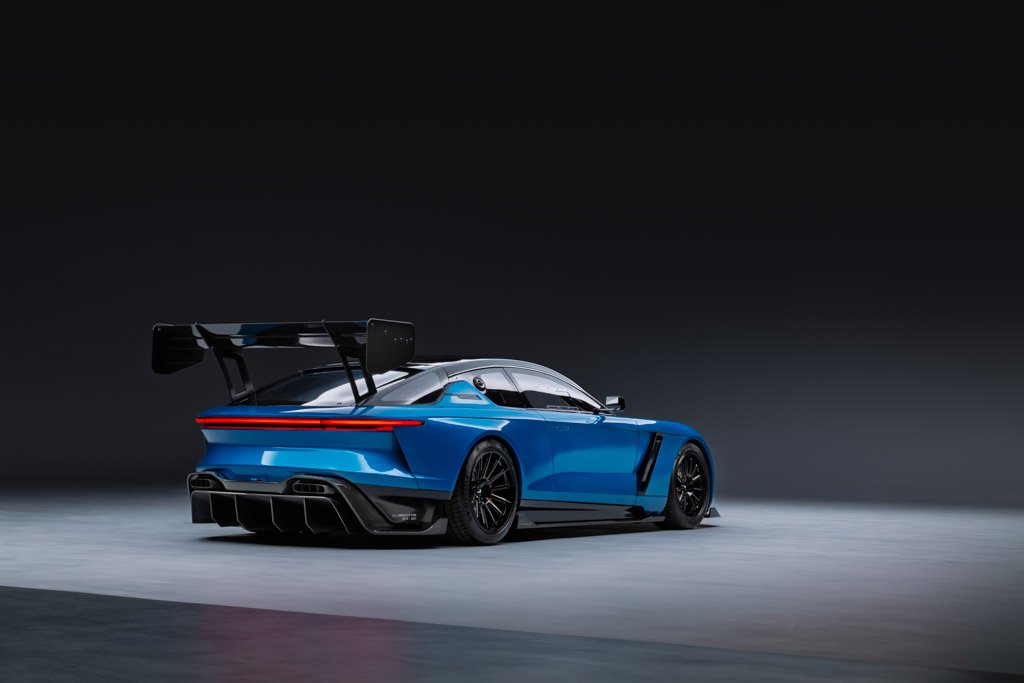
In profile, the relationship between the long bonnet, compact cabin and muscular rear bodywork subtly echoes the visual balance of the original Interceptor, while avoiding overt retro design cues. The aesthetics maintain an effortless sense of elegance and visual flow throughout the body side, despite the more aggressive aerodynamic and cooling requirements of the track-focused GTX. The distinctive floating rear roof section and wraparound glasshouse subtly reference one of the defining visual signatures of the historic 1960s Interceptor, reinterpreted with a more architectural, contemporary treatment.
At the rear, the Interceptor GTX adopts a much more technical and performance-oriented character than its predecessor, integrating a large diffuser, exposed aerodynamic elements and slim full-width LED lighting signatures. Aerodynamics significantly influenced the body design, with cooling, airflow management, and high-speed stability informing the surfacing and proportions from the earliest stages of the project. Computational Fluid Dynamics was applied to the data-driven design process.
The GTX features a fully functional motorsport-derived aerodynamic package incorporating a front splitter, flat underfloor, rear diffuser and a two-plane rear aerofoil. The adjustable rear wing can generate over 350kg of downforce, and all aerodynamic components are constructed from structural carbon fibre and designed to serve a genuine aerodynamic function rather than be purely decorative.
While state-of-the-art digital technology was central to the design process, the Jensen Interceptor GTX crucially retains the visual sophistication and emotional appeal expected of a hand-built British GT.
The body of the Interceptor GTX is handcrafted from aluminium by Coventry Metalcraft, one of the UK’s leading specialist coachbuilding and prototype manufacturing companies. Based in Coventry and drawing upon decades of experience producing hand-formed aluminium
bodywork for low-volume and ultra-high-performance automotive projects, the company worked closely with Jensen International and Avant Design throughout the development of the GTX.
Combining traditional metal-shaping techniques with modern digital development processes, Coventry Metalcraft translated the GTX’s digitally created surfacing and proportions into a hand-formed aluminium body.
While the design itself was developed entirely in the digital environment and verified by the Avant Design team via their industry-leading Mixed Reality Technology, the process of creating the finished body panels relied heavily on human judgment and craftsmanship.
Once the digital design data had been finalised, Coventry Metalcraft’s engineering and fabrication teams developed the tooling and panel strategies required to create the car’s body. Traditional coachbuilding tools and techniques remain central to Coventry Metalcraft’s work. The company operates 10 English Wheels alongside a full suite of specialist metal-forming equipment and traditional tooling, allowing its team of more than 30 skilled artisans to transform flat aluminium sheets into sculpted aluminium body panels.
Although the final car appears visually seamless, much of the construction’s complexity lies beneath the surface, with intricate internal cuts, welds, and fixings engineered to ensure both structural integrity and a high-quality finish. Individual sections of the body often needed to be broken down into multiple components before being carefully formed, assembled and refined by hand.
Ultra-precise dimensional inspection was used throughout the build process, combined with total trust in the artisans’ eye and experience in shaping the car. The result is a thoroughly contemporary engineered car that possesses the beauty and presence that only a genuinely hand-built coachbuilt body can truly achieve.
Northamptonshire-based specialist automotive composites company Artiglio Automotive Studio produced the GTX’s bespoke structural carbon fibre aerodynamic components and created the dedicated moulds used to form them. Developed specifically for the Interceptor GTX, the components form an integral part of the car’s functional aerodynamic package and underline the level of specialist engineering and craftsmanship involved throughout the programme.
Once the finished aluminium body had been delivered to Jensen International, the team invested up to 600 hours in preparing it for in-house painting. The blue body and black roof paint are inspired by a popular period Interceptor colour combination.
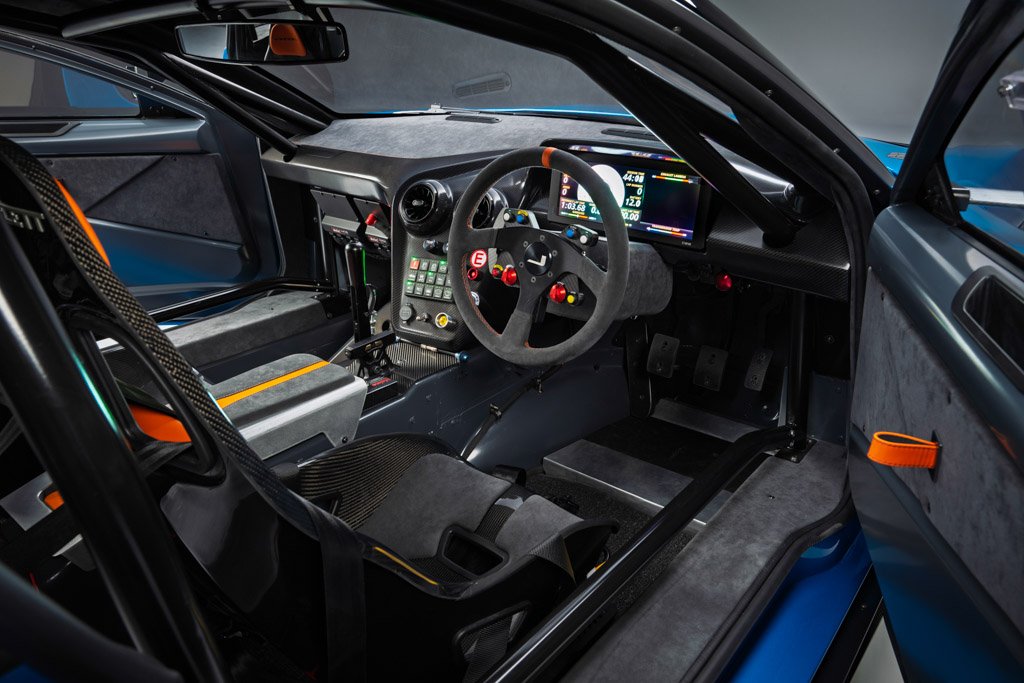
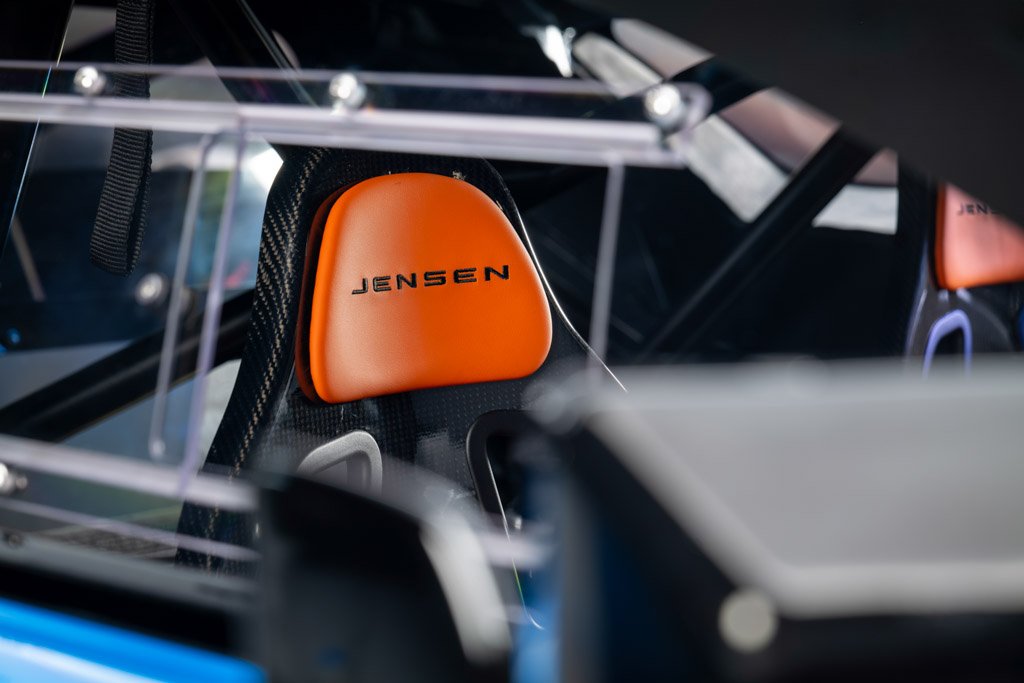
Once painted, the Interceptor was fitted with lightweight, motorsport-grade polycarbonate glazing, aligning with the track-optimised approach that has formed the character and detail of the Interceptor GTX’s cabin. A bespoke FIA-approved safety cage, Tillett carbon fibre competition seats, six-point harnesses, and a Lifeline fire extinguisher system were fitted to provide occupants with optimal protection.
A configurable MoTeC digital display system provides all key vehicle information, including temperatures, pressures, gear selection and engine data, while the wider cabin intentionally
avoids unnecessary screens or electronic distractions. However, the interior has not been conceived as a completely bare, stripped-out race car. Alcantara trim and padding are integrated throughout the cabin, including the seats, while coordinated orange stitching, orange leather door pull straps, and a retrimmed motorsport steering wheel introduce subtle warmth and character to the otherwise functional cockpit environment.
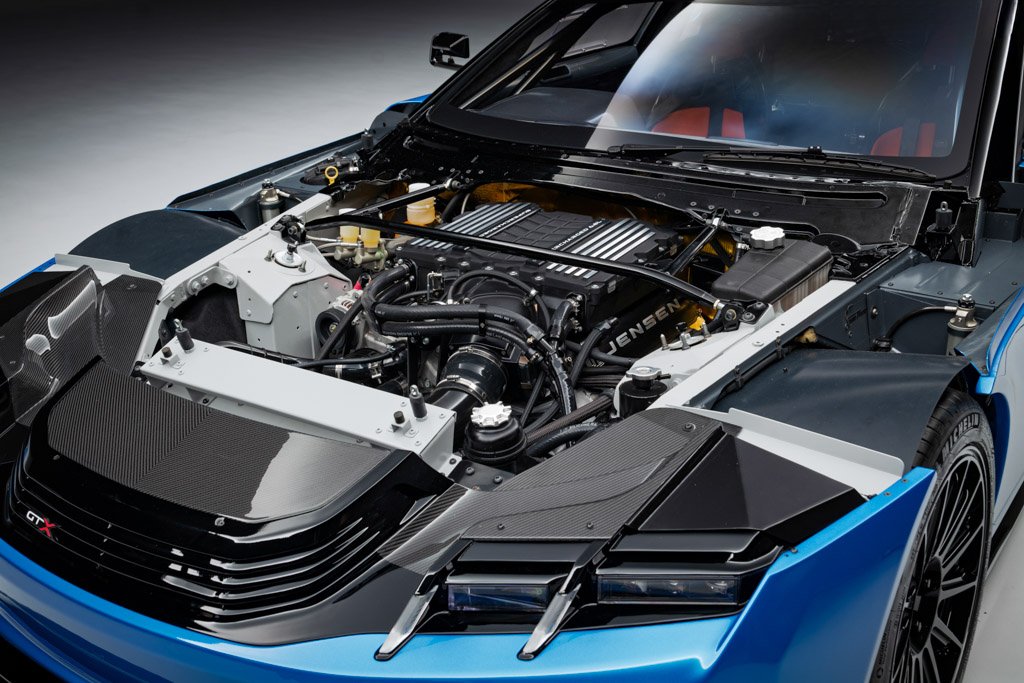
As with the original Jensen Interceptor, the beating heart of the 2026 Interceptor GTX is a front-mounted, exceptionally powerful V8 engine that drives the rear wheels. For the all-new Interceptor, Jensen International drew on its years of experience with General Motors V8 engines to inspire its choice of power unit.
Compact and relatively lightweight, with a low centre of gravity compared to multi-cam layouts, this configuration provides significant advantages in space and packaging flexibility. However, fewer than 20 per cent of GM components are used; the rest comprises a fully forged rotating assembly and high-grade motorsport components, custom-built to Jensen International’s bespoke specification.
The development and construction of the Interceptor GTX’s unique-to-specification power unit were entrusted to Late Model Engines (LME). Based in Houston, Texas, LME is widely regarded as one of the world’s leading high-performance engine specialists. The company has extensive experience developing bespoke LT-series V8 applications. LME built the Interceptor GTX engine to a 6.8-litre capacity, paired with a 2.65-litre Roots-type supercharger with electronic boost control.
The Roots-type positive-displacement supercharger was selected for its immediate throttle response, linear power delivery and immense low- and mid-range torque, giving the Interceptor GTX the effortless, muscular performance expected of a modern Jensen. The engine’s relatively low-profile installation also allows the GTX to retain its long, low bonnet line.
Further enhancements include CNC-machined heads, titanium valves and optimisation of the variable valve timing and direct-injection systems. A motorsport-grade MoTeC engine management system forms part of the control systems designed by Jensen. This specification enables the engine to safely produce up to 1,200bhp and over 1,100 lb-ft of torque, subject to application, with multiple power maps available for selection.
Revving to 7,000rpm, the engine is designed to deliver torque-rich, repeatable and highly durable performance, without the constant rebuild schedules often associated with extreme track-only specials.
“From the outset, exceptional performance and a genuinely involving driving experience were always hugely important to the Interceptor programme, particularly in this first track-focused GTX form,” explains Duerden. “But durability, drivability and reliability mattered just as much. We wanted to create a car that feels mechanical, responsive and properly analogue, but also something capable of absorbing sustained hard use without compromise. That’s why we chose to work with Late Model Engines and why we’ve used only the very best proven motorsport-grade engineering solutions throughout the project. The GTX is an extreme car in terms of performance, but it also needed to feel robustly engineered, usable and dependable.”
A bespoke carbon fibre prop shaft, positioned within a rigid steel torque tube, transfers the engine’s formidable power and torque to the rear transaxle. The arrangement creates an exceptionally strong, highly rigid connection between the engine and transmission, while also shielding the driveline from heat generated by the custom stainless-steel, titanium-tipped exhaust system.
A rear-mounted Samsonas Motorsport six-speed sequential transmission with straight-cut dog gears further reinforces the GTX’s character, adding to the intensity and sheer physical engagement of the driving experience. Drivers can change gear either via a lever mounted on the transmission tunnel or through steering-column-mounted paddles. Going forward, road-going models could feature either a conventional H-pattern manual gearbox or a fully automatic transmission. The benefits of this layout include improved weight distribution, which helps optimise the vehicle’s balance.
Power is transferred to the rear wheels via a Wavetrac differential, while a fully adjustable motorsport-grade traction control system is integrated into the car’s broader MoTeC electronic architecture. Drivers can also dial in a launch control system to assist full acceleration off the line.
To provide the stopping power required for sustained high-performance track use, Jensen leveraged its longstanding experience working with BG Developments, a UK specialist in high-performance braking systems, to engineer a motorsport-grade AP Racing brake package for the Interceptor GTX.
The system incorporates floating steel discs, competition-derived pad compounds, fully configurable motorsport ABS calibration, and a cockpit-adjustable brake balance for optimum adjustability, feel, and response. Steel brake discs were deliberately selected over carbon-ceramic alternatives to prioritise consistency, usability, and repeatable performance under varied track conditions.
“The driver still needs to drive the car properly,” continues Duerden. “The electronic systems are there to support the experience, not dilute it. Apart from the adjustable traction control, launch control and motorsport ABS systems, we’ve deliberately avoided unnecessary electronic intervention. We wanted the GTX to feel mechanical, connected and genuinely analogue in the way it delivers its performance.”
The chassis of the Interceptor GTX is based upon a state-of-the-art all-aluminium, bonded-extrusion construction. Lightweight yet exceptionally strong and rigid, it endows the car with exceptional agility and high-speed stability. Double aluminium wishbones are employed front and rear, paired with custom-built Nitron three-way adjustable dampers developed in close collaboration with the Oxfordshire-based motorsport suspension specialist. Jensen elected to use manually adjustable dampers during the initial development phase, allowing engineers to establish and refine baseline chassis settings before any future transition toward electronically controlled systems.
Steering is provided by a hydraulic power-assisted rack arrangement developed to complement the car’s analogue handling characteristics and enhance the purity of the driving experience. The Interceptor GTX rides on 20-inch custom-made, one-piece forged aluminium Vossen wheels and Michelin Pilot Sport tyres.
“We chose Michelin Pilot Sport tyres not only for their known quality, but also because, as road tyres, they are more approachable and more usable for non-professional drivers. In addition, they provide more relevant feedback for the development of road models,” explains Duerden.
The unveiling of this first car marks the beginning of a much broader programme for Jensen International. The Interceptor GTX will now undergo extensive dynamic testing, evaluation and further development to enable Jensen to continue refining all aspects of the car’s performance. Jensen will work with future customers to tailor individual vehicle specifications and to evolve the programme in response to owner requirements and feedback.
Beyond the initial GTX programme, Jensen International’s longer-term vision includes the development of a road-going Interceptor GTR with the same analogue philosophy and high-performance character as the GTX, followed by a more luxury-oriented Grand Touring model. Together, these future programmes will establish a modern interpretation of Jensen for a new generation.
“The Interceptor GTX is the first physical expression of our vision for the future of Jensen. It combines everything we believe a modern Jensen should be – individual, engaging, beautifully engineered and rewarding to drive. While this is only the first step, the GTX gives a clear indication of where we are heading and marks the beginning of an exciting new era for the marque, laying the foundations for future road-going ultra-high-performance GTR and luxury GT models,” concludes Duerden.
| Engine | |
| Configuration | Late Model Engines V8 |
| Location | Front, longitudinally mounted |
| Construction | aluminium alloy block and head |
| Displacement | 6,800 cc / 415 cu in |
| Valvetrain | 2 valves / cylinder, OHV |
| Fuel feed | Direct Fuel Injection |
| Lubrication | Dry sump |
| Aspiration | Supercharge |
| Power | 960 bhp / 716 kW |
| Red Line | 7,000 rpm |
| BHP/Liter | 141 bhp / liter |
| Drivetrain | |
| Chassis | extruded bonded aluminium spaceframe |
| Suspension (fr/r) | double wishbones, coil springs over dampers, anti-roll bar |
| Steering | rack-and-pinion, hydraulic power assistance |
| Brakes (fr/r) | AP Racing ventilated discs, ABS |
| Gearbox | Samsonas 6 speed Sequential |
| Drive | Rear wheel drive |
Be the first to comment