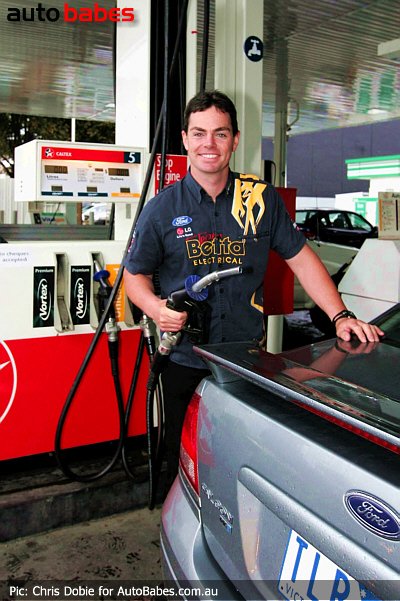
One of the greatest attractions of the AMC Masters is the chance to rub shoulders with some of Australia’s legendary muscle car racers. Last year, the many stars that attended the event included Allan Moffat, Peter Brock, Bob Jane, Harry Firth, Colin Bond, Bob Morris, John Goss, Leo Geoghegan, Kevin Bartlett, Fred Gibson, John Harvey, John French, Barry and Glenn Seton to name just a few. Even more big have been added to AMC’s Team of Champions invite list for 2006.
After last year's thrilling battle in the pouring rain, The Biante boys will be back bigger and better than ever. And they’re promising even more cars which will require at least two (possibly three) fully subscribed fields to fit them all in. And from this year, there’s an extra incentive to win. The Eastern Creek Historic Touring Car battle is now a stand-alone event carrying enormous prestige, as the overall winner will be crowned the 2006 (Group N) MUSCLE CAR MASTER!
Historic Touring Car racing’s popularity with competitors and spectators is not hard to understand, at a time when modern motor racing is becoming increasingly crammed with parity-based formulas featuring cars that look and sound the same. By comparison, the Biante Historic Touring Car Series offers a staggering variety of vehicles competing in three distinct groups, which represent specific golden eras of post-war Aussie touring car racing: Pre-1958, 1959-1964 and 1965-1972.
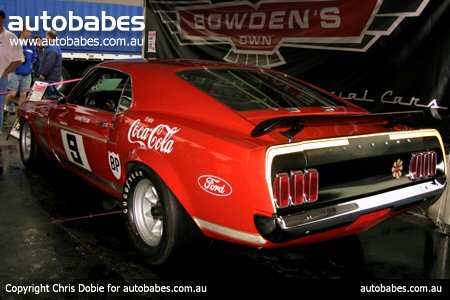
1965-1972 is arguably the ‘glamour’division of Biante Historic Touring Car racing and of most interest to muscle car fans. Thanks to a clever compromise in technical rules, these cars capture the raw, power-sliding excitement of early 1970s ‘Series Production’ and ‘Improved Production’ cars in one category. The class is broken down into four sub-classes based on engine capacity, where you’ll see everything from Datsun 1600s and GTV Alfas up to classic hot sixes like Torana XU-1s, Hemi Chargers and Pacers. The big grunter muscle cars of the ‘Over 5000cc’ class put on a real USA vs Australia grudge match, with hot V8 Camaros and Mustangs going head to head with Aussie Falcons and tough Holden Monaros.
These vehicles must have been manufactured between January 1, 1965 and December 31, 1972. The make and model must have been raced in Australia during that period.
The general driveline specifications (ie engine block, gearbox housing and rear axle housing) must be as originally manufactured and brakes must remain within original dimensions. The heavy hitters in this incredibly popular class of racing have been thrilling race fans with their foot hard down, tail-out style of muscle car motor sport.
The real crowd puller of
these historic events are the Group C cars. Unlike the Biante
Series rules, which allow modern day re-creations or ‘replicas to
compete, the Group C Historic Touring Cars grids are strictly for cars
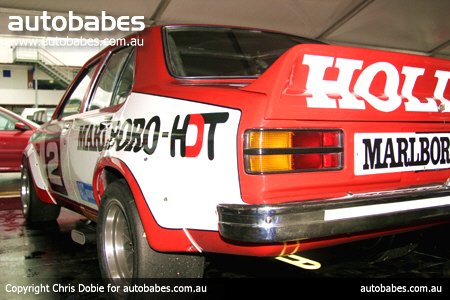
that actually competed during the years between 1973 and 1984. They must
also run the same mechanical specification as was required during that
golden era. Because of this strict authenticity code, Group C Historic
Touring Car competitors are also actively encouraged to present their
cars in the liveries they displayed during their ‘first competition
careers between 1973 and 1984. For old motorsport fans like me it's
heaven, but It's hard to believe that for a long time after the end
of Group C racing (1984) these cars could attract little more than beer
money and many were either scraped and butchered for their parts, turned
into Sports Sedans or return to road use where they were lost forever.
Each year more and more of these great cars and found and restored to
their former glory and the class continues to grow in numbers and
popularity.
Last
year's rain drenched race Group C race was a cracker - The
lead battles on a soaked
track between Frank Binding’s Army Reserve XD Falcon and
V8 Supercar star Jason Richards an
ex John Harvey HDT Torana
A9X brought the house down. This
year the Group C drivers are looking forward to another
mighty crack at The Creek, as they compete for the inaugural 2006 (Group
C) MUSCLE CAR MASTER award!
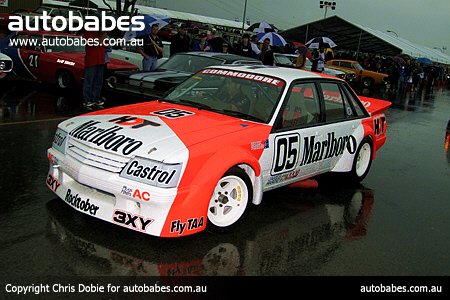
Just like their Group C stable-mates, Group A cars must have competed during the 1985-92 era to be eligible for the Historic racing class . It’s early days for Group A Historic racing, but the number of cars is definitely building. For now, however, they proudly join the ranks of the bulging Group C grids .
Fingers crossed that their will not be a repeat of last years weather and we will finally see all of the legendary Aussie Racing Muscle cars take to the circuit so fans car see and here what these car are all about. These sessions are called Master Blasts. This is special track time throughout the day reserved exclusively to display the most famous and valuable touring cars in Australia, driven at reasonably high speeds for the enjoyment of muscle car fans. The Master Blasts are specifically non-racing track demonstrations, showcasing immortal cars from the famous Bowden Muscle Car Collection in Queensland, prized exhibits from the National Motor Racing Museum at Bathurst, plus selected high quality replicas of famous race cars which are no longer with us.
_________________________________________________
The V8
SuperCars
___________________

___________________

___________________
___________________
___________________
___________________

___________________